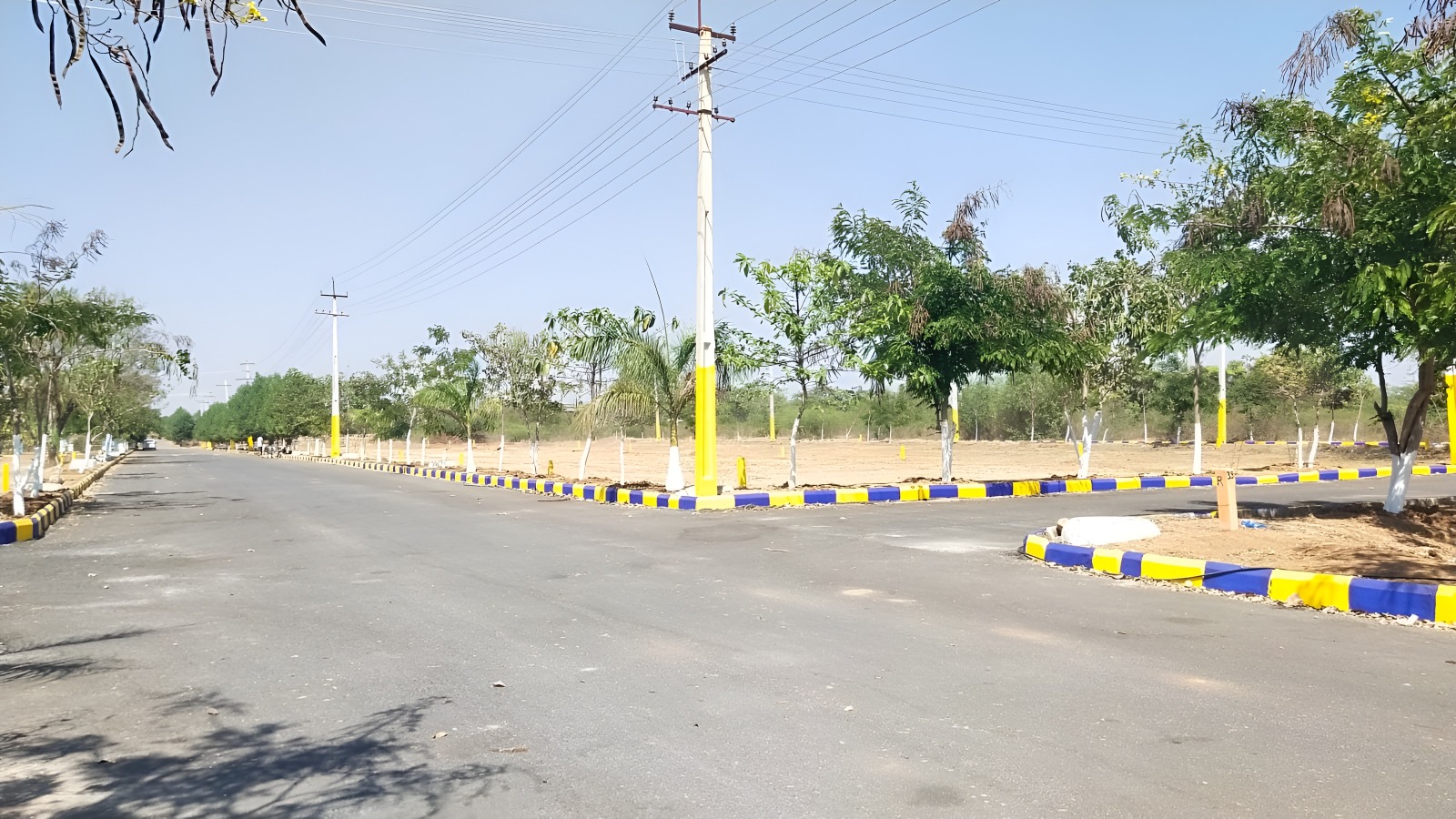
Future City Real Estate: An Honest Look at the Opportunity and the Risks
Key takeaways
- Confirmed: FCDA is operating, a police commissionerate exists, about 1,000 acres of industrial land has been allotted and an access road is under construction.
- Still a plan: the airport-to-Future-City metro, AI City and the 25–30 lakh population target.
- Best for buyers who can hold 7–10 years, verify approvals and don't need the money back early.
Updated 30 September 2026: new analysis with confirmed developments and risks as of this date.
Future city real estate is one of those topics where you can find a bull case and a bear case within the same scroll. One broker says 2x by 2030. A political opponent calls the project a real estate venture on repurposed pharma land. Both are worth reading. Neither is a reason to buy or skip.
We sell plots in the area, so weigh this accordingly. What we've tried to do here is separate what has actually happened from what's still a plan, then say who this does and doesn't suit.
What has actually happened
- A statutory authority exists and works. The FCDA was set up in March 2025, and Deccan Chronicle reported it fully operational with approval powers moved over from HMDA and DTCP.
- There is a police commissionerate. The state created the Future City Police Commissionerate by notification on 29 December 2025, per the public record.
- Industrial land is being allotted. A September 2026 Siasat report says about 1,000 acres near Takkellapalli have been allotted to ten multinational companies for factories, and an 8 km access road is being built for about ₹30 crore.
- The FCDA office is at Meerkhanpet, where the Skill University is also being built.
- The state is still selling the vision. A Business Standard piece from 29 September 2026 describes the plan as a roughly 30,000-acre hub for AI, data centres, advanced manufacturing and research.
What's still on paper
- Metro. A roughly 40 km line from the airport towards the Skill University has been discussed since 2024, with an estimated cost of about ₹8,000 crore, according to the metro authority's Phase II note. Reports describe it at survey and DPR stage. We haven't seen a sanction and construction start, so don't price it in.
- AI City. The industries minister has spoken of a 200-acre AI City under a public-private model, per the Telangana Today Future City page. An announcement isn't a tenant.
- Population. The plan mentions 25–30 lakh residents eventually. Cities of that size take decades, not five years.
The case for
Entry prices are still well below the western corridor, where a broker source puts Kokapet and Tellapur at ₹40,000–₹80,000 per square yard against ₹13,500–₹35,000 here. The government is the master developer, which usually means roads and utilities arrive on a plan rather than by accident. There's real industrial and institutional activity to point to, not just renderings. And plots are simple to hold: no tenants, no maintenance beyond fencing and a corpus fee.
The case against
- Timing risk. Appreciation follows visible construction. If the main roads slip by three years, so does your gain.
- Political and land-use risk. The project has vocal opposition. Telangana Today coverage includes BRS leaders criticising the use of former Pharma City land and warning of agitation if farmers' lands are not returned. A change of government could change priorities.
- A soft broader market. Hyderabad home registrations were reported down 9% year on year in a 26 September 2026 news brief.
- Approval confusion. Approvals moving from HMDA/DTCP to FCDA created a grey zone for some older layouts. That's solvable with paperwork, but only if you do the paperwork.
- Exit liquidity. Plots take months to sell in a slow market, and every seller in the corridor is competing with you.
How long should you plan to hold?
We tell buyers 7 to 10 years, and we mean it. If a plot doubles in five years, great, but a plan that only works in that scenario is a bet, not an investment. Ask yourself whether you'd still be comfortable holding it in year eight if the price hadn't moved much.
A sensible way to size it
Land is illiquid. Keep the amount to money you won't need for a decade, keep your emergency fund separate, and don't stretch the loan so far that a rate change hurts. If you plan to build eventually, the plot is also a home, which changes the maths in your favour. We're not financial advisors, and your circumstances matter more than any general rule here; a fee-only planner is worth an hour of your time.
How Future City compares with other options
| Option | Entry cost | Time to see results | Main risk |
|---|---|---|---|
| Future City plots | Lower per sq yd | 7–10+ years | Execution and timing |
| Established western plots | Much higher | Shorter, less upside | Already priced in |
| Regional Ring Road farmland | Low | Uncertain, not buildable | Conversion and title |
For the farmland comparison, read our RRR farmland guide, and for the wider set of options see emerging real estate corridors in Hyderabad.
Who should skip it
Anyone who needs liquidity inside five years, anyone buying without verifying approvals, and anyone who has been promised a return. Everyone else can look at approved, well-documented layouts. Start with our buyer's guide to future city plots in Hyderabad, then compare rates in the price guide.
Want us to check a specific layout with you?
Send us the LP number and survey number. We will tell you what the records show, including when the answer is "we can't confirm this one".
Frequently Asked Questions
Is Future City real estate a good investment in 2026?
What are the biggest risks of investing in Future City?
Is the Future City metro confirmed?
How long will it take for Future City to develop?
Should I buy a plot or a flat near Future City?
How do I reduce risk when buying Future City real estate?
Sources and further reading
- FCDA now fully operational (Deccan Chronicle) – authority set up and approval powers devolved
- Future City Police Commissionerate (Wikipedia) – creation on 29 December 2025
- New road to link Bharat Future City (Siasat) – 1,000 acres allotted; 8 km road
- Hyderabad Metro Phase 2 note (HMRL) – proposed Fourth City metro line
- Telangana Today: Future City coverage – AI City announcement and opposition criticism
- Business Standard, 29 Sep 2026 – state's 30,000-acre vision
We link to official portals and news reports so you can check the facts yourself. Broker and developer pages are marked nofollow and cited only for price quotes, which are asking rates rather than registered sale values.
This article is general information from Kubera Realty, not legal or financial advice. Prices are indicative and change often. Verify approvals and title with a property lawyer before paying any token amount.
← Back to all blogs